
Norton County Marriage License Records
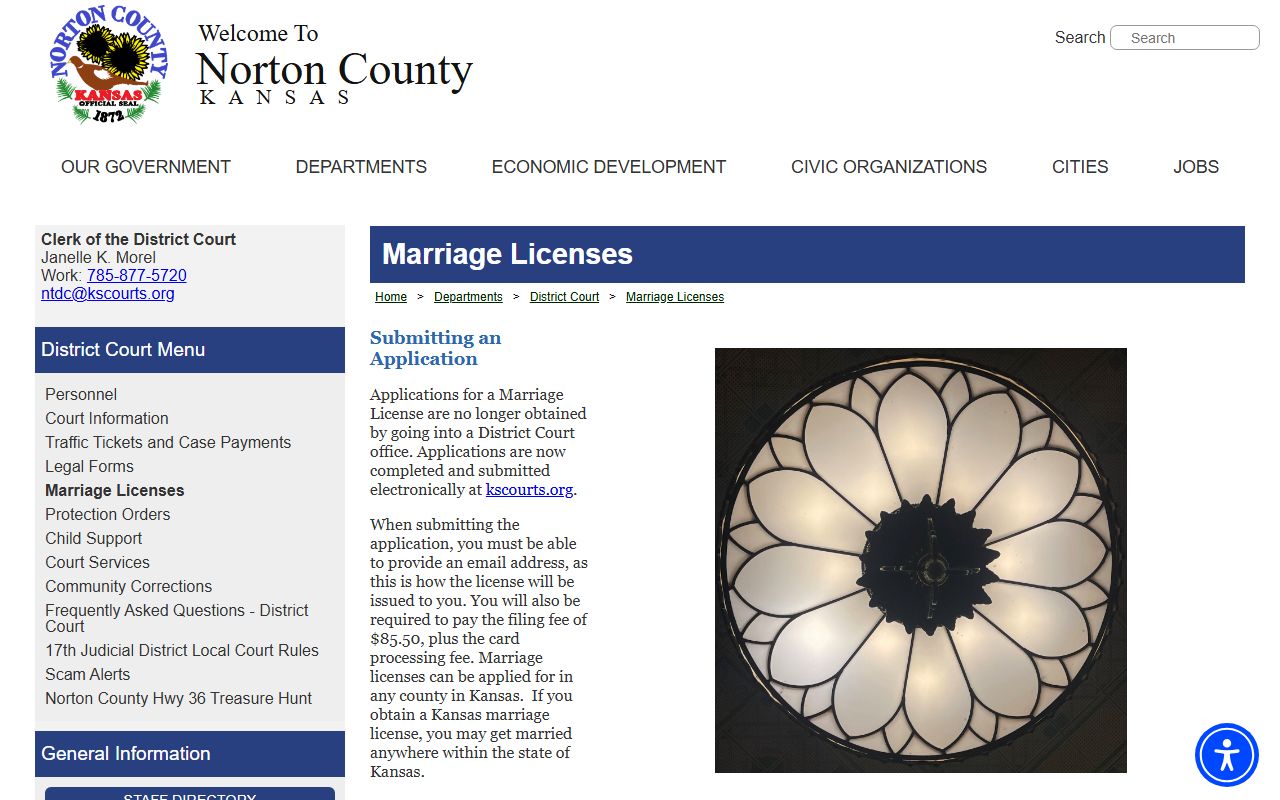
Marriage licenses in Norton County are tied to the Kansas District Court system, but the application is no longer picked up at the courthouse counter. Norton County directs applicants to the statewide electronic marriage-license process through Kansas courts. A Kansas marriage license may be applied for through any Kansas county and then used for a ceremony anywhere in the state. The license is issued by encrypted email after the required waiting period, so applicants need a usable email address before they begin.
The official Norton County source for local marriage-license instructions is the District Court marriage-license page.
After the ceremony, the completed license must be returned to the issuing court on time. For a certified proof of marriage, Norton County points users to the Kansas Department of Health and Environment Office of Vital Statistics rather than treating the District Court counter as the certificate office.
Apply for a Norton County Marriage License
The Kansas online process is the best starting point for a Norton County marriage license because the county states that applications are completed and submitted electronically. The court-selected county processes the application, the fee is paid online, and the license is sent by encrypted email once the waiting period has run.
- Open the Kansas courts electronic marriage-license application and select a Kansas county to process the license.
- Enter a reliable email address because the license is issued by encrypted email.
- Provide the required applicant information in the state application and review it before payment.
- Pay the Kansas marriage-license fee and the card processing charge shown by the system.
- Wait three days before issuance. The license is not available for immediate use.
- Use the license for a Kansas ceremony within six months after it is issued.
- Return the completed license to the issuing court within 10 days after the ceremony.
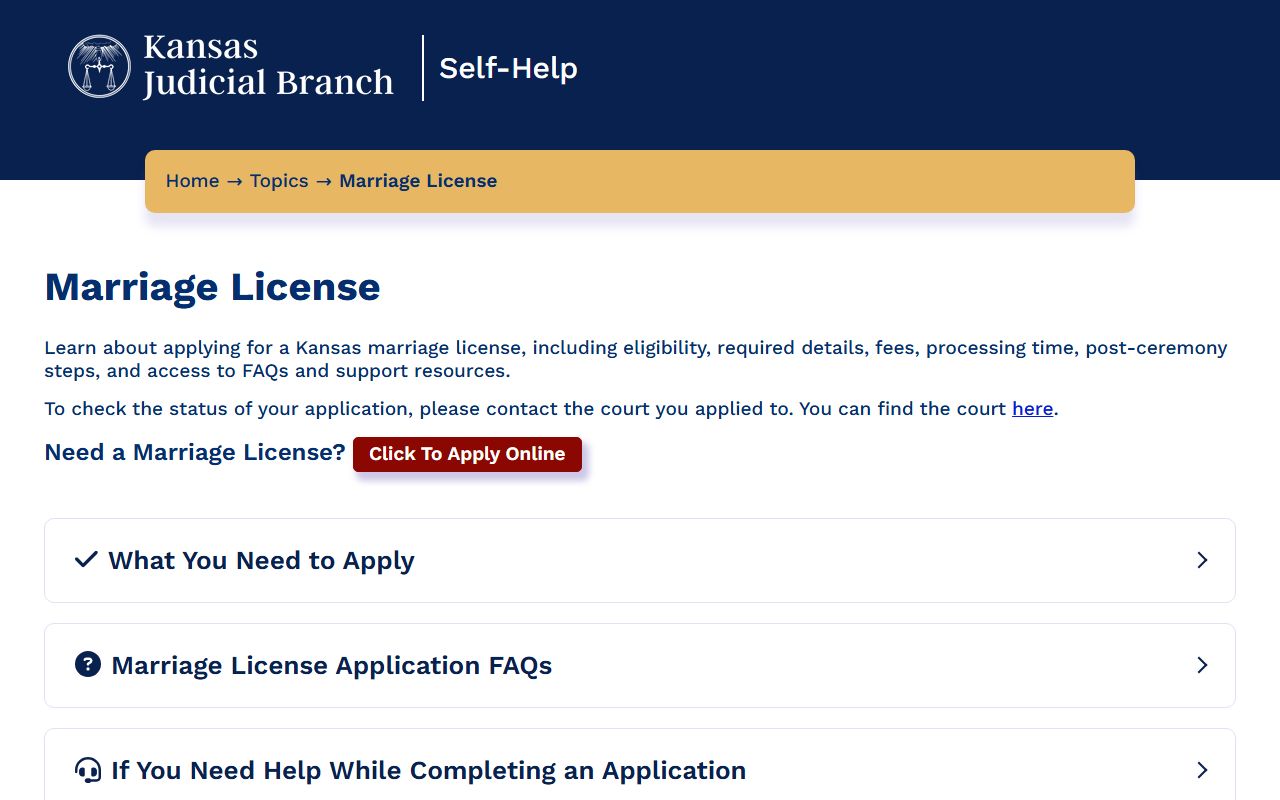
The statewide self-help source for the same process is the Kansas Self-Help marriage-license page.
Norton County Marriage Application Fields
The live statewide form was not fully accessible during research, so only verified field expectations are listed. Norton County confirms the electronic application path, the email-based issuance method, payment, and county selection. General Kansas materials may ask for more identifying and ceremony details, but unverified fields should not be treated as a local checklist.
| Field or Input | Status | Research-Based Notes |
|---|---|---|
| Email address | Required for issuance | Norton County says applicants must provide an email address because the license is sent by encrypted email. |
| Kansas processing county | Required in the online process | A Kansas license can be applied for in any county and used anywhere in Kansas. |
| Applicant identifying information | Expected | State materials typically require party details, but the researched local page did not publish a full field list. |
| Payment information | Required | The filing fee is paid with an added card or electronic processing fee. |
| Ceremony or officiant details | May be requested | Do not rely on a local paper form because Norton County says applications are electronic. |
Norton County Marriage and Divorce Fees
Norton County research provides a clear marriage-license amount and District Court copy charges. It does not provide a local fee for a certified marriage certificate from KDHE or a local divorce filing fee in the marriage-divorce section, so those amounts are not supplied here.
| Item | Fee or Rule |
|---|---|
| Kansas marriage license | $85.50 |
| Card or electronic processing | Additional processing fee, exact Norton County amount not listed |
| Waiting period | 3 days before issuance |
| License validity | 6 months from the date issued |
| Return deadline | Within 10 days after the ceremony |
| District Court printed copies | $0.25 per page |
| District Court certification | $1.00 per certification |
Note: Certified marriage certificate fees should be confirmed with KDHE because Norton County does not list that state vital-record amount.
Find Norton County Divorce Records
Divorce records are not marriage-license records. In Norton County, divorce, annulment, separate maintenance, child support, and other domestic-relations matters are District Court case files. If a divorce case is public, it may be searchable through Kansas Case Search or through the public terminal in the Clerk of the District Court office. Older files, certified decrees, and document-specific requests should go to the clerk by fax, mail, email, or in person.
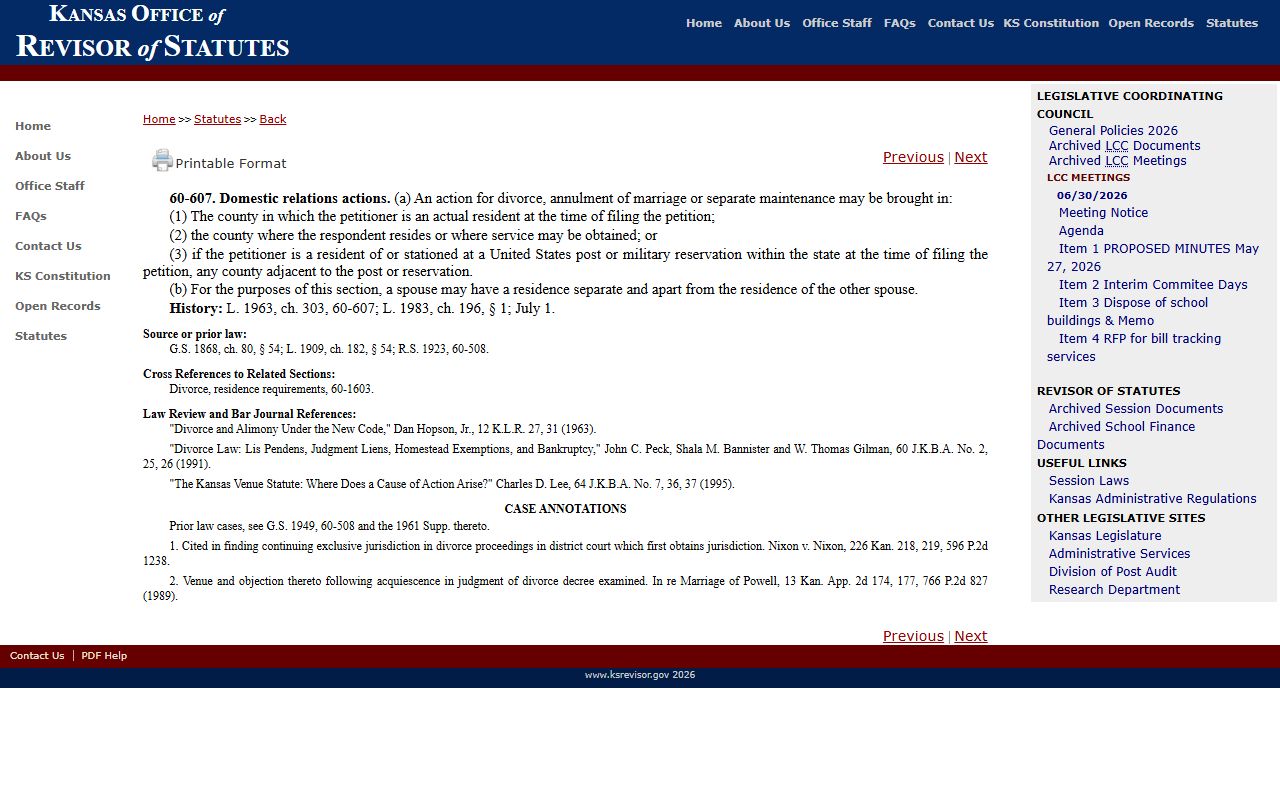
Kansas venue for divorce, annulment, and separate maintenance is addressed in K.S.A. 60-607. That statute matters at filing time because it points to the county where a petitioner resides, where the respondent resides or can be served, or certain military-post-related venues. For record seekers, it helps explain why a Norton County resident's divorce may or may not have been filed in Norton County District Court.
Certified Norton County Copies
Certified divorce decrees and certified copies of other divorce case documents should be requested from the Clerk of the District Court. A useful request identifies the case number if known, party names, the exact document wanted, and the preferred delivery method. The clerk has three business days to respond after receiving a court-record request, then provides the total cost if records are found. Documents are sent after payment is received.
Certified marriage proof follows a different path. Norton County's marriage-license instructions direct users to KDHE Office of Vital Statistics for certified copies. That distinction matters for passports, benefits, name-change evidence, and other uses where a certificate-style vital record may be required instead of a court case copy.
Restricted Norton County Family Records
Public access does not mean every family-law filing is open. Divorce files may include financial account data, protected addresses, child information, Social Security numbers, sealed exhibits, and protection-order-related material. Public copies can be redacted, and some records may require party status, attorney authority, or a court order.
Marriage-license application details can also contain personal identifiers. Requesters should ask for the specific record needed rather than broad personal data. For general court access rules, the Clerk of the District Court is the local records office, while Kansas vital-record certificate rules are handled at the state level.